40 Year Recertification Repair: Top 3 Critical Steps if Defects Are Found
Receiving a report that your building requires a 40 year recertification repair is one of the most stressful moments for any condominium board or property manager. Instantly, fears of condemned buildings, astronomical special assessments, and displaced residents come to mind.
Take a deep breath. Finding structural or electrical defects during Phase 1 of a Milestone Inspection is incredibly common for aging buildings in Florida. It does not mean your building is going to be shut down tomorrow. It simply means you are entering the repair phase of the compliance process. This guide outlines the exact steps you need to take to navigate a 40 year recertification repair efficiently, safely, and legally.
Table of Contents
What Triggers a 40 Year Recertification Repair?
Under the Florida Building Safety Act, a licensed engineer must perform a visual inspection of your property. They are looking for “substantial structural deterioration.” If they find issues like widespread concrete spalling (flaking), severely corroded rebar, foundation settlement, or outdated, hazardous electrical panels, they must note these in the report.
When these defects are officially documented, the local building official requires the association to undertake a 40 year recertification repair program to restore the building to safe operating standards.
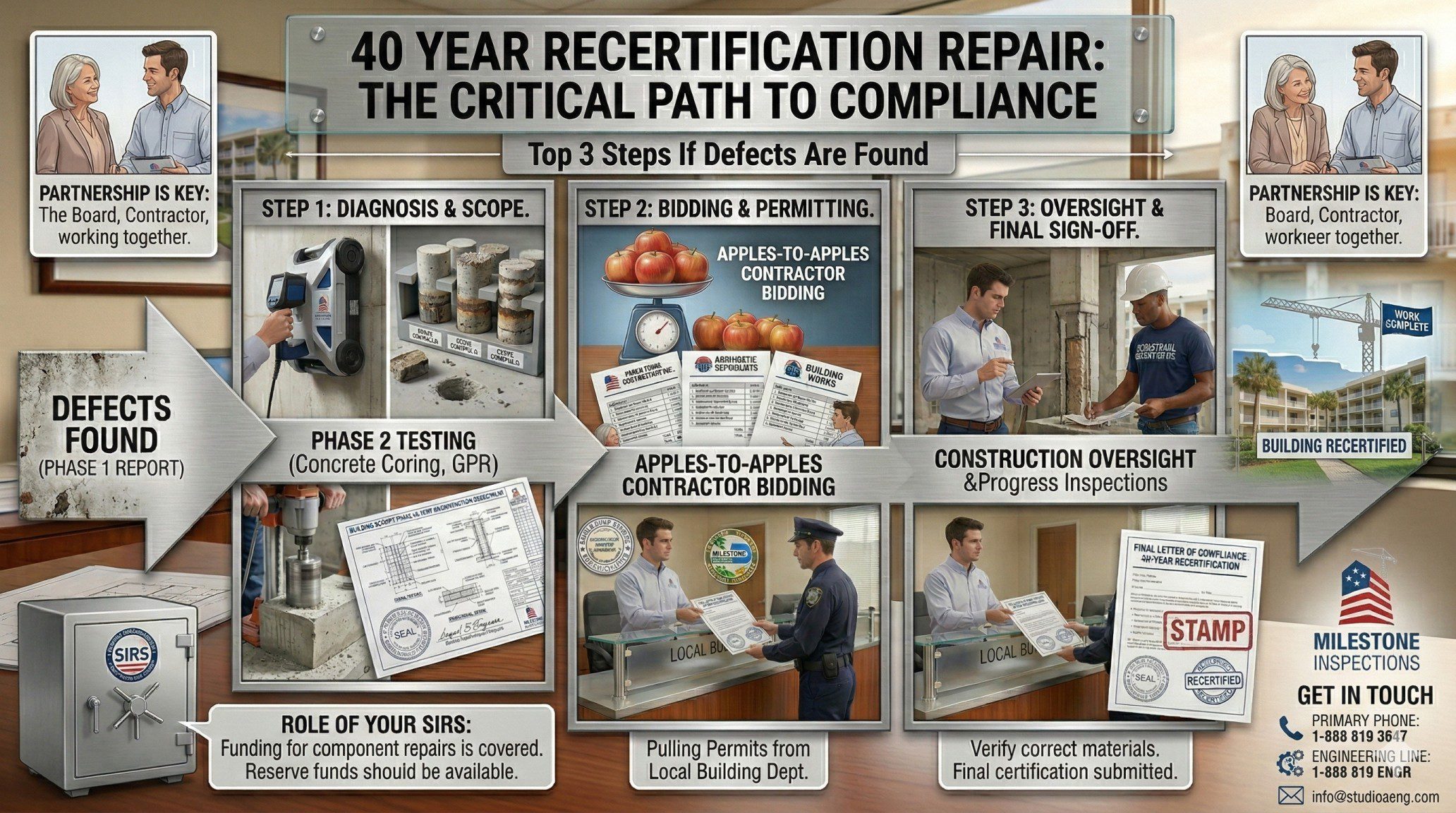
The Top 3 Critical Steps to Completing Your Repair
Once defects are identified, you must follow a highly structured engineering and construction process.
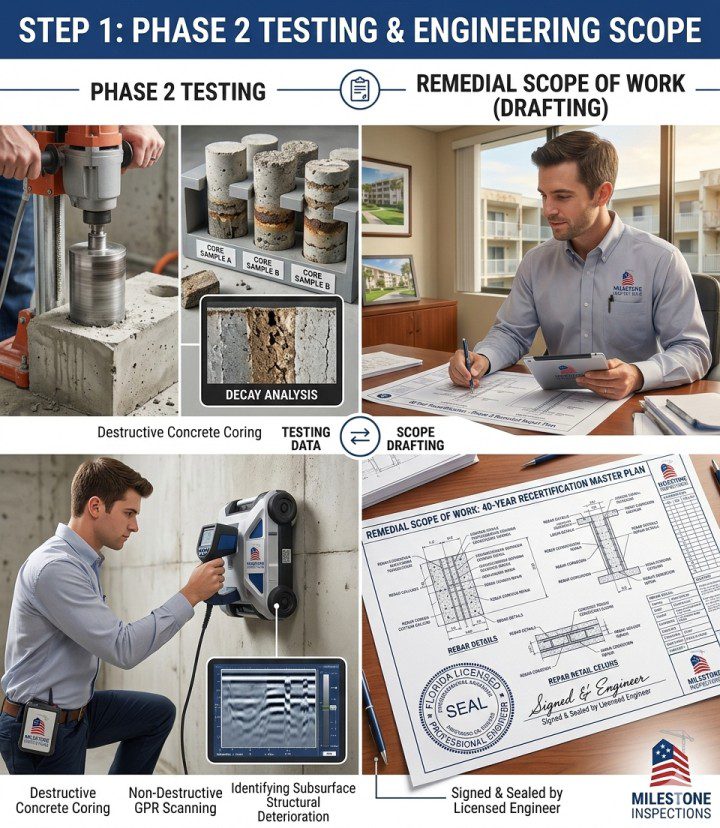
Step 1: Phase 2 Testing and Engineering Scope
You cannot fix what you haven’t fully diagnosed. Before hiring a contractor, your engineer must perform a Phase 2 Inspection. This involves non-destructive and destructive testing (like concrete core sampling or ground penetrating radar) to see exactly how deep the decay goes.
Once the extent of the damage is known, the engineer drafts a Remedial Scope of Work. This is a highly detailed, signed, and sealed blueprint of exactly how the 40 year recertification repair must be executed. This document is non-negotiable; it is the master plan to bring your building back to code.
Step 2: Contractor Bidding and Permitting
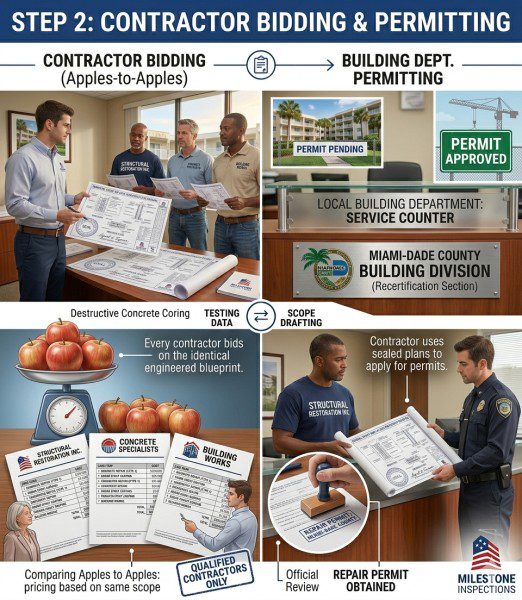
With the engineer’s scope of work in hand, your board can now solicit bids from qualified general contractors who specialize in structural restoration. Because every contractor is bidding on the exact same engineering blueprint, you can compare pricing “apples to apples.”
Once a contractor is selected, they will use your engineer’s sealed plans to pull the necessary repair permits from your local building department, such as the Miami-Dade County Building Division.
Step 3: Construction Oversight and Final Sign-Off
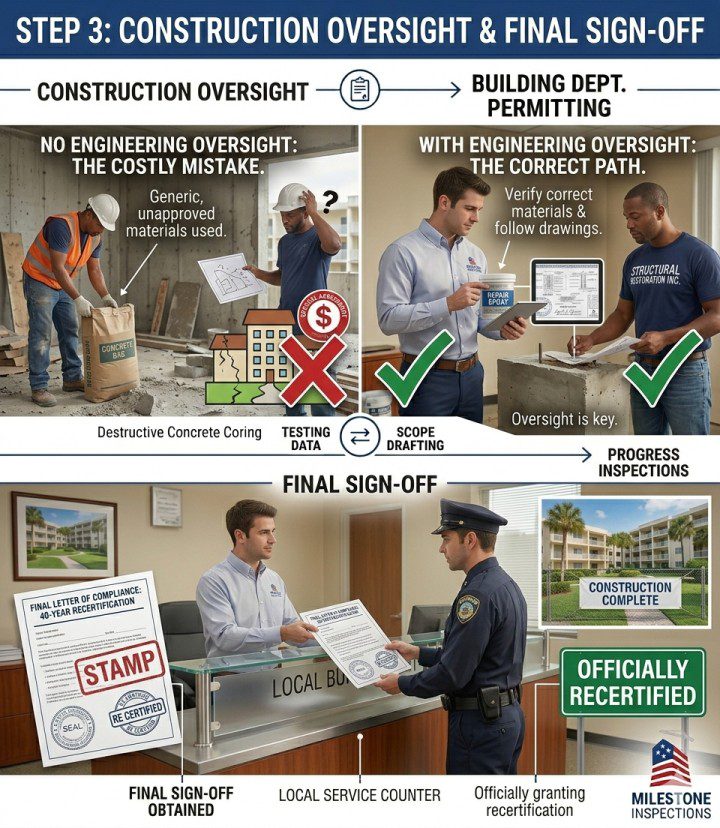
This is where many associations make a costly mistake: they let the contractor work without oversight. During a major 40 year recertification repair, your structural engineer must remain involved. The engineer will perform periodic progress inspections to verify that the contractor is actually using the correct materials and following the structural drawings.
Once the construction is complete, the engineer conducts a final inspection. If everything passes, they submit a final letter of compliance to the city, officially granting your building its recertification.
The Timeline: How Long Do You Have?
The law recognizes that engineering, permitting, and construction take time. You are not expected to fix major structural issues in a week.
Once your initial report is submitted showing that a 40 year recertification repair is required, the building official will generally grant a timeline for completion. Under standard procedures, associations are typically given up to 365 days to commence and complete the necessary repairs, provided the building is not in imminent danger of collapse. Your engineer will help you apply for these necessary time extensions.
Funding the Repairs: The Role of Your SIRS
The biggest hurdle is often financial. How do you pay for this? This highlights the importance of the new Structural Integrity Reserve Study (SIRS).
If your association has a fully funded, up-to-date SIRS, the money for these major component repairs (like roof replacement or concrete restoration) should already be in your reserve accounts. If not, the board will need to secure a bank loan or issue a special assessment to cover the construction costs.
Don’t Face the Repair Process Alone
Navigating a 40 year recertification repair requires a dedicated partnership between the condo board, the general contractor, and the structural engineer.
At Milestone Inspections US, we don’t just find the problems—we design the solutions. We provide the comprehensive Phase 2 testing, the remedial repair designs, and the strict construction oversight required to get your building safely certified.
Contact our licensed engineers today to discuss your inspection findings and get a clear, actionable roadmap for your building’s repairs.