Licensed Electrical Engineer for Milestone Inspection: The #1 Best Guide
While the structural aspect of Florida’s new building safety laws gets the most headlines, the electrical requirements are equally critical. Many condo associations are surprised to learn that a licensed electrical engineer for milestone inspection is often required to certify the safety of their building’s power systems.
Electrical failures are invisible hazards that can lead to devastating fires. The Milestone Inspection law (SB-4D) mandates a thorough review of these systems for aging buildings. This guide will explain exactly when you need an electrical engineer, what they look for, and how to ensure your building achieves its milestone certification.
Table of Contents
Why You Need a Licensed Electrical Engineer for Milestone Inspection
Under Florida law, the Milestone Inspection is divided into two disciplines: Structural and Electrical. While a general professional engineer can perform the Phase 1 visual survey, if any concerns are raised regarding the electrical system, or if the building is of a certain complexity, the expertise of a specialist is required.
Hiring a licensed electrical engineer for milestone inspection ensures that your building is evaluated by a professional who understands the nuances of the National Electrical Code (NEC) and the specific aging characteristics of high-voltage systems in Florida’s humid environment.
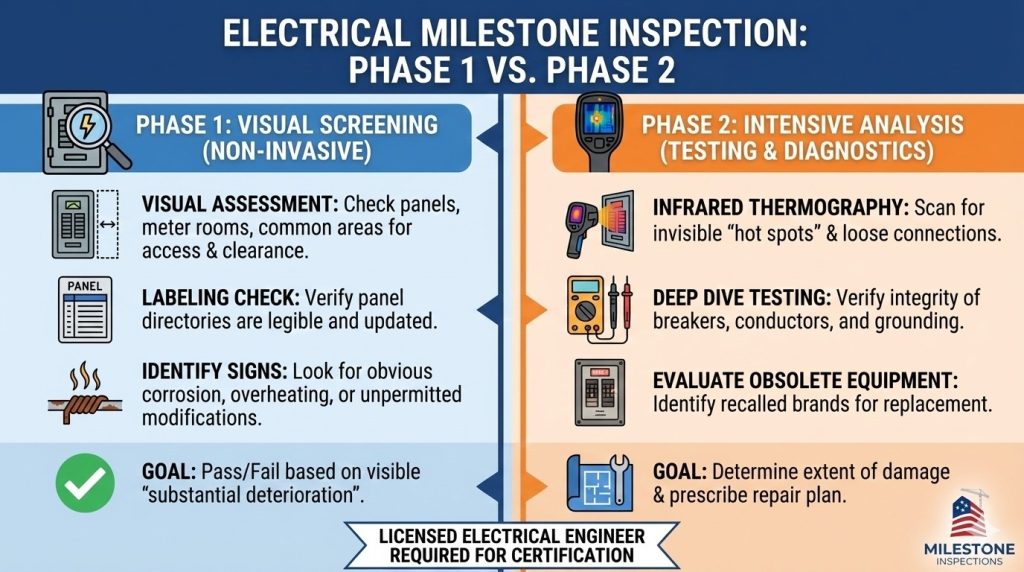
The Difference Between Phase 1 and Phase 2 Electrical
Phase 1: This is a visual snapshot. We look at the main service panels, the meter rooms, and general wiring conditions in common areas. We are looking for obvious signs of overheating, corrosion, or unpermitted modifications.
Phase 2: If Phase 1 reveals issues—such as an old, recalled electrical panel brand or signs of water intrusion in the electrical room—a Phase 2 inspection is triggered. This is where a licensed electrical engineer for milestone inspection performs a deep dive, often using advanced testing equipment to verify the integrity of the system.
3 Common Electrical Failures We Look For
Aging condos in Florida face specific threats. Here are the three most common issues our engineers identify.
1. Corroded Service Entrance Conductors
The main wires bringing power from the utility grid into your building are often located underground or in damp meter rooms. Over 30 or 40 years, moisture can penetrate the conduit, causing the copper or aluminum wires to corrode. This increases resistance and heat, creating a significant fire risk.2. Outdated or Recalled Panels
Many buildings constructed 30+ years ago used electrical panels (such as Federal Pacific or Zinsco) that have since been proven to have high failure rates. A licensed electrical engineer for milestone inspection will identify these obsolete components and recommend replacement to ensure breakers trip correctly during a surge.
3. Improper “Handyman” Modifications
Over decades, well-meaning maintenance staff often add circuits or make repairs that do not meet code. We frequently find double-tapped breakers, improper grounding, and overloaded circuits in common areas. These code violations must be corrected to pass the inspection.
Preparing Your Building for the Electrical Review
One of the most common questions we receive is, “How can we prepare?” While a licensed electrical engineer for milestone inspection must see the system “as is,” there are steps your maintenance team can take to ensure the inspection goes smoothly and to demonstrate proactive management.
1. Clear Access to Electrical Rooms:
Code requires specific clearance distances (working space) around electrical equipment. Often, electrical rooms become storage closets for brooms, ladders, or boxes. Before the engineer arrives, ensure all electrical rooms are clear of debris. If the engineer cannot safely access a panel due to clutter, it may result in a failed inspection item or a return visit fee.
2. Label Your Panels:
A well-maintained system is a well-labeled system. Over time, panel schedules (the list of what each breaker controls) can become illegible or inaccurate. Having your maintenance staff verify that panel directories are legible and updated shows the inspector that the building is being actively managed.
The infographic below outlines the specific differences in scope between the visual Phase 1 check and the intensive Phase 2 analysis.
Safety First: Arc Flash and Shock Hazards
Beyond the Milestone requirements, a visit from a licensed electrical engineer for milestone inspection is an excellent opportunity to review general electrical safety. One of the critical safety standards we look for is protection against Arc Flash hazards.
An Arc Flash is a type of electrical explosion that results from a low-impedance connection to ground or another voltage phase in an electrical system. It is a serious life-safety hazard for anyone working on the equipment.
Updating Your Safety Protocols
During our review, we often find that older equipment lacks the proper warning labels required by modern OSHA and NFPA 70E standards. While the Milestone Inspection focuses on the condition of the equipment, a conscientious engineer will often point out these safety labeling deficiencies.
Ensuring your main switchgear is properly labeled with Arc Flash warnings doesn’t just help you pass inspections; it protects your maintenance staff and outside contractors from severe injury. It is a vital part of your association’s liability protection strategy.
The Long-Term Value of an Electrical Audit
View this mandatory inspection not as a burden, but as a valuable audit of your building’s nervous system. Electrical components do not last forever. Switchgear has a life expectancy of 30-50 years. By hiring a qualified licensed electrical engineer for milestone inspection, you are getting a roadmap for the future.
This expert analysis allows you to plan for capital improvements—like an electrical service upgrade—years in advance, rather than waiting for a catastrophic failure that leaves residents without power and the board scrambling for emergency funds.
Advanced Diagnostic Tools: Infrared Thermography
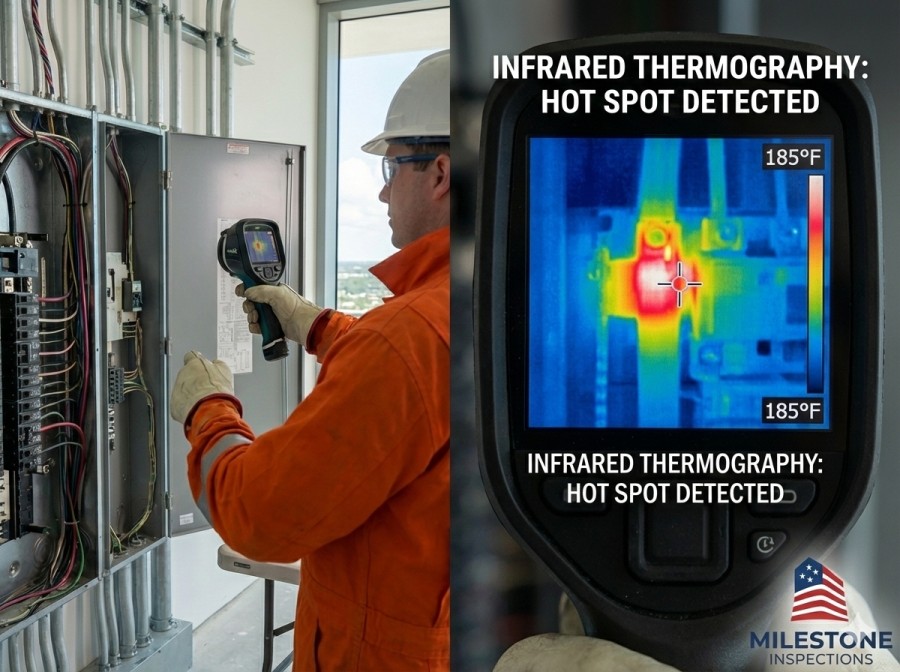
One of the most powerful tools we use is Infrared (Thermal) Imaging.
Electrical faults often generate heat long before they spark or smell like smoke. By scanning your main switchgear and panels with a thermal camera, we can see “hot spots” invisible to the naked eye. These hot spots indicate loose connections or overloaded circuits.
Using thermography allows us to pinpoint exactly which breaker or wire needs attention without shutting down power to the whole building. It is a non-invasive, highly accurate method that adds immense value to your report.
The Importance of the “Milestone Engineer” Seal
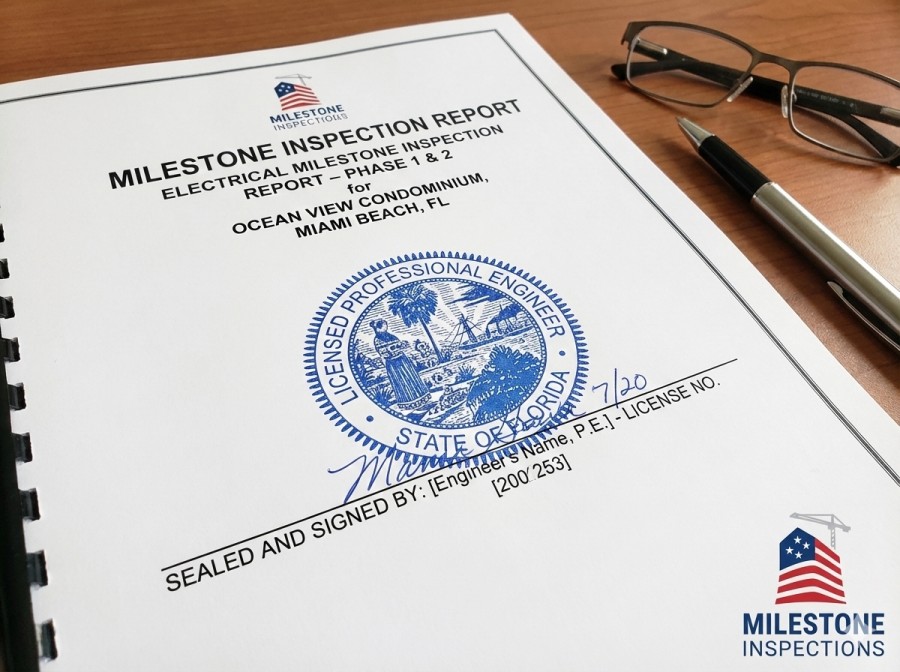
Just like the structural report, the electrical portion of your Milestone Inspection must be signed and sealed by a qualified professional. This seal is your guarantee of liability and compliance.
Submitting a report stamped by a licensed electrical engineer for milestone inspection tells the local building official that your building has been vetted by the highest authority. It smooths the path to recertification and protects the association board from claims of negligence. You can review the electrical safety standards we follow at the National Fire Protection Association (NFPA) website.
Integrating with Your SIRS Report
If your electrical inspection reveals that the main switchgear or distribution panels are nearing the end of their useful life, this data is vital for your Structural Integrity Reserve Study (SIRS).
The cost to replace a main electrical room can be substantial. By identifying this need during the Milestone Inspection, we can ensure it is accurately reflected in your SIRS Report, allowing the association to budget for it over time rather than facing a surprise special assessment.
Secure Your Electrical Safety Today
Don’t leave the safety of your building’s power systems to chance. Whether you are in Phase 1 or require a Phase 2 analysis, you need a specialist.
Contact us today to speak with a licensed electrical engineer for milestone inspection and get a clear proposal for your building.
Request a Proposal
The fastest way to get answers is to call us directly. Our team is available to discuss your building’s specific needs.