Milestone Inspection Phase 2: Your #1 Guide to Success
For many condominium associations, receiving a report recommending a milestone inspection phase 2 feels like a failing grade. It often triggers immediate anxiety about costs, special assessments, and the safety of the building. However, entering Phase 2 does not mean your building is condemned or unsafe; it simply means that the engineer needs more data to ensure the long-term stability of the structure.
Understanding the specific goals and methods of a milestone inspection phase 2 is the best way to manage the process calmly and efficiently. This guide will demystify the testing procedures, explain the timelines, and show you the clear path from “further investigation” to final certification.
Table of Contents
What Triggers a Milestone Inspection Phase 2?
The Florida Building Safety Act (SB-4D) structures the recertification process into two distinct parts. Phase 1 is a visual screening. If the licensed engineer sees no signs of “substantial structural deterioration,” the building passes, and no further action is needed for 10 years.
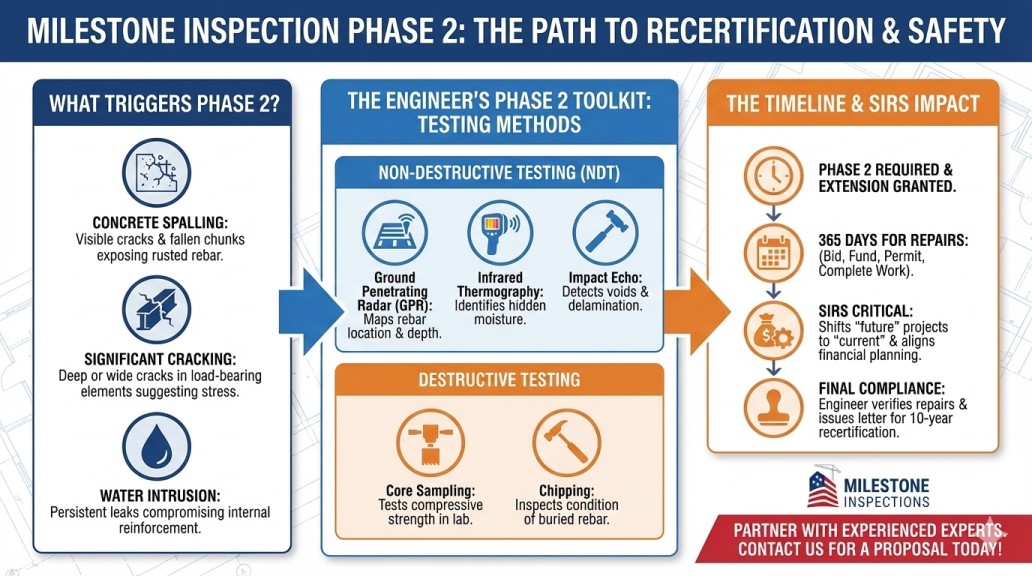
However, a milestone inspection phase 2 is automatically triggered if the engineer identifies specific red flags during the visual survey. Common triggers include:
- Concrete Spalling: Visible cracks where chunks of concrete have fallen away, revealing rusted rebar.
- Significant Cracking: Deep or wide cracks in load-bearing columns, beams, or shear walls that suggest settlement or stress.
- Signs of Water Intrusion: Persistent leaks that may have compromised the internal steel reinforcement over time.
The goal of Phase 2 is not just to find problems, but to quantify them. The engineer must determine if the damage is localized (a simple repair) or systemic (requiring a major restoration project).
The Phase 2 Toolkit: Destructive vs. Non-Destructive Testing
Unlike the visual Phase 1, a milestone inspection phase 2 involves getting below the surface. Engineers use a variety of scientific methods to “see” inside the concrete.
Non-Destructive Testing (NDT)
We always aim to start with methods that do not damage the building.
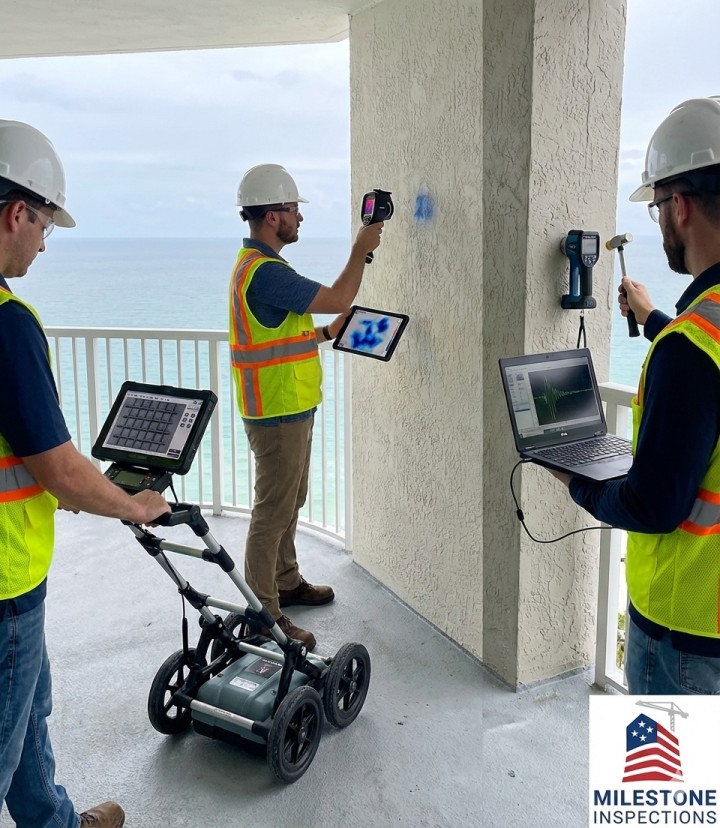
- Ground Penetrating Radar (GPR): This technology allows us to map the location and depth of rebar inside the concrete without drilling.
- Infrared Thermography: We use thermal cameras to identify hidden moisture pockets behind stucco or inside roofs, which are often the root cause of structural rot.
- Impact Echo: Using sound waves to detect voids or delamination (separation) inside a concrete slab.
Destructive Testing
Sometimes, physical samples are required to get a definitive answer.
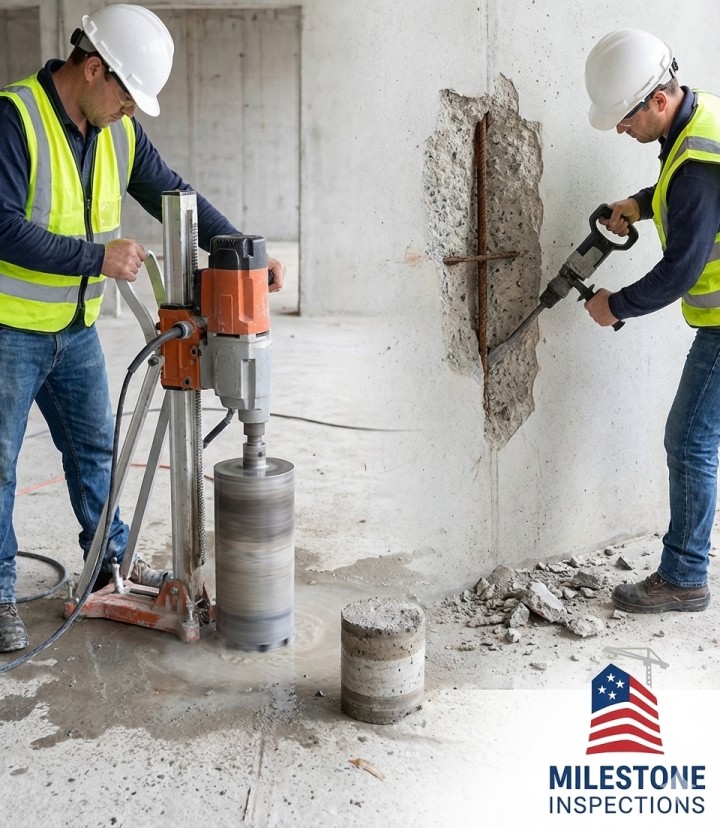
- Core Sampling: We drill a small cylinder of concrete out of the structure to test its compressive strength in a lab.
- Chipping: We may remove small patches of concrete to visually inspect the condition of the buried steel rebar to see how much cross-sectional area has been lost to rust.
The Timeline: Extensions and Repairs
One of the biggest misconceptions about a milestone inspection phase 2 is that repairs must happen overnight. The law recognizes that engineering analysis and construction take time.
Once the Phase 2 requirement is established, the building official typically grants an extension to complete the study. If the final Phase 2 report indicates that remedial work (repairs) is needed, the association usually has 365 days to commence and complete those repairs.
This timeline allows the board to:
1. Receive the engineer’s scope of work.
2. Put the project out to bid to general contractors.
3. Secure funding (via reserves or a loan).
4. Pull permits and complete the work.
The Role of the SIRS in Phase 2
If your building requires extensive repairs, this will impact your reserve funds. This is where your Structural Integrity Reserve Study (SIRS) becomes critical.
The SIRS is designed to ensure you have funds for *future* maintenance, but a Phase 2 finding often shifts a “future” project to a “current” project. A qualified engineering firm can help you update your SIRS to reflect the reality of the Milestone findings, ensuring your financial planning stays aligned with your structural needs.
Moving Toward Recertification
The ultimate goal of a milestone inspection phase 2 is to guide the building back to health. Once the engineer’s recommended repairs are completed and verified, the engineer will issue a final letter of compliance. This closes the permit and grants the building its recertification for another 10 years.
You can read more about the specific code requirements for existing buildings on the Florida Building Code website.
Partner with Experienced Phase 2 Experts
Navigating a Phase 2 inspection requires a team with deep diagnostic experience and the ability to design practical, cost-effective repair solutions.
At Milestone Inspections US, we specialize in guiding associations through this complex process with clarity and confidence.
Contact us today if you have received a notice for a milestone inspection phase 2 and need a professional proposal.
Request a Proposal
The fastest way to get answers is to call us directly. Our team is available to discuss your building’s specific needs.