
SIRS vs Reserve Study: The #1 Critical Comparison Guide
For decades, responsible condominium associations in Florida have relied on “Reserve Studies” to budget for future repairs. However, the introduction of the Structural Integrity Reserve Study (SIRS) under Senate Bill 4-D has created a new landscape of compliance. The confusion regarding SIRS vs reserve study requirements is widespread, with many boards asking, “We already have a study; do we really need a new one?”
The short answer is yes. The SIRS is not just an update; it is a fundamentally different legal document with stricter requirements, higher professional standards, and less flexibility for the board. This guide will break down the critical differences and explain why your old study may no longer be sufficient.
Table of Contents
1. The Scope: Structural Safety vs. General Maintenance
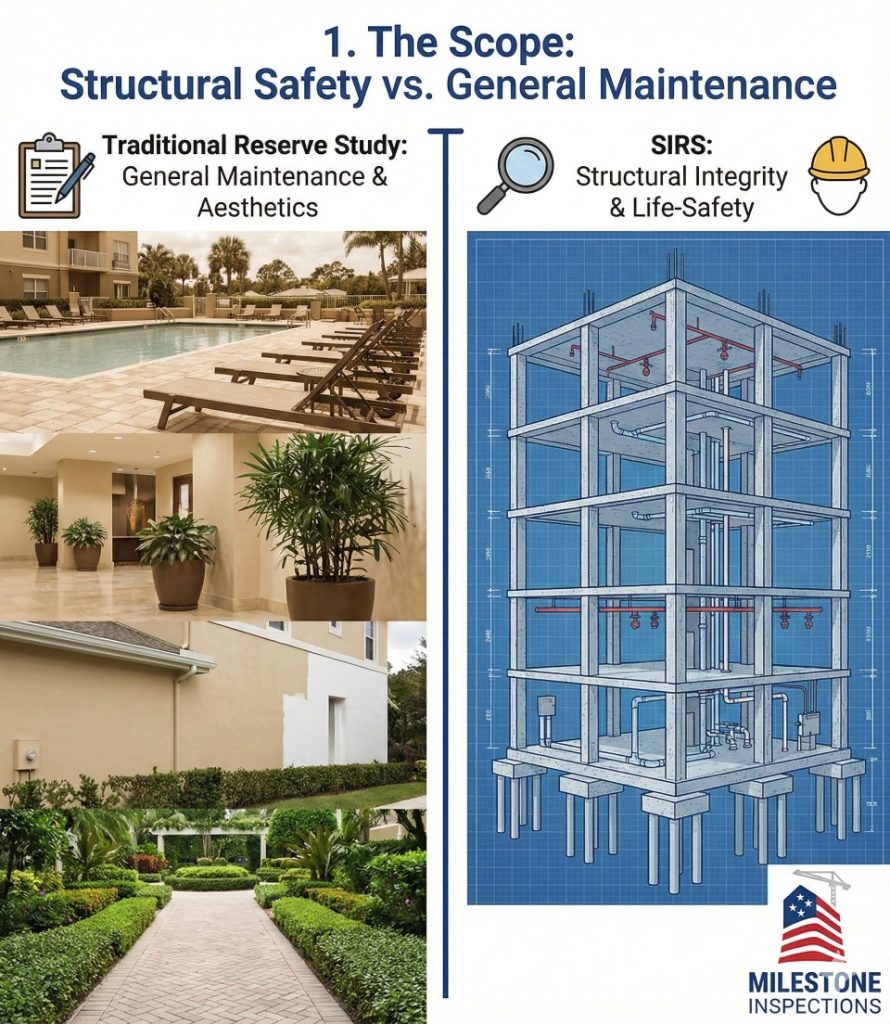
The most fundamental difference in the SIRS vs reserve study comparison is the scope of what is inspected.
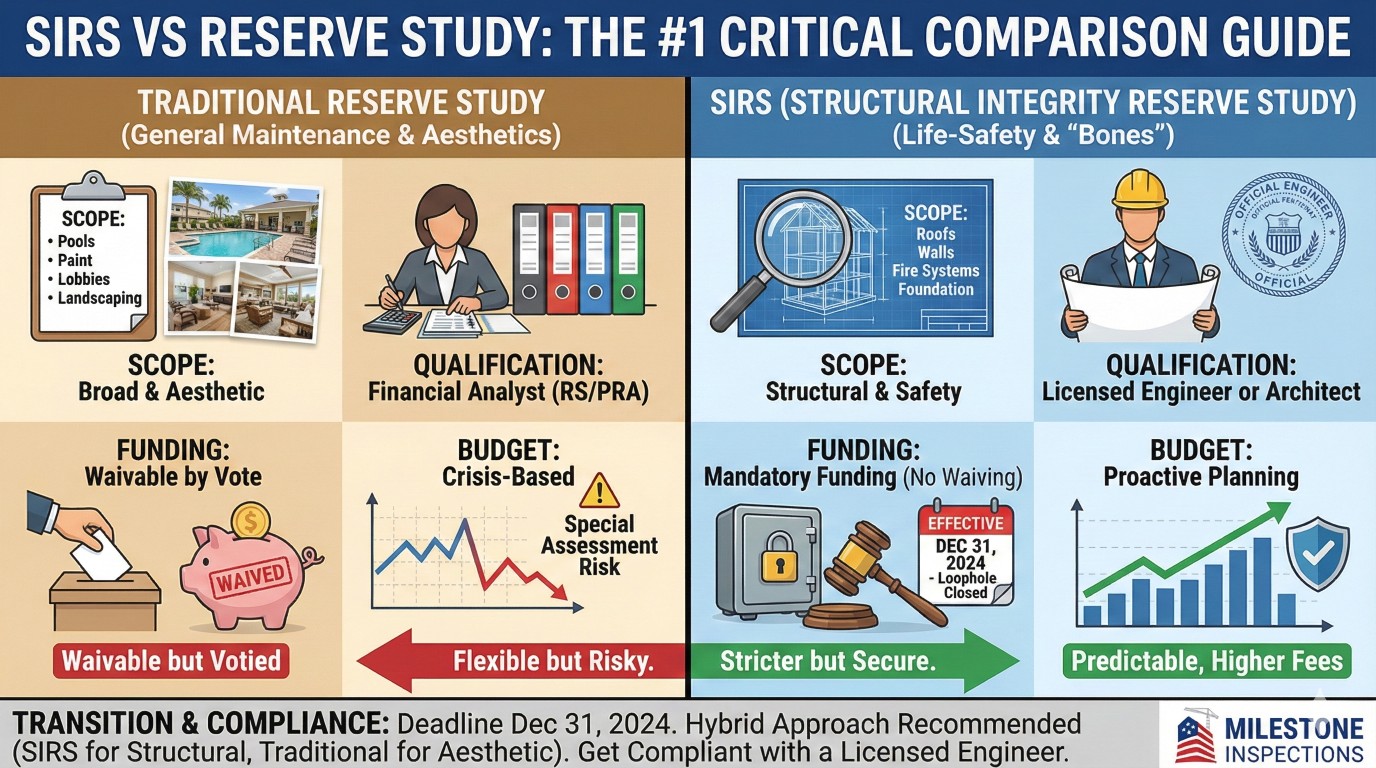
Traditional Reserve Study: Historically, these studies covered everything the association was responsible for maintaining. This included structural items (roofs) but also aesthetic items like pool furniture, lobby renovations, pavement resurfacing, and landscaping.
SIRS (Structural Integrity Reserve Study): This study is laser-focused on the “bones” and life-safety systems of the building. By law, it must include specific structural components if they are the association’s responsibility and have a deferred maintenance cost exceeding $10,000. These include:
- Roofs and Load-bearing walls
- Floors and Foundations
- Fireproofing and Fire Protection Systems
- Plumbing and Electrical Systems
- Windows and Exterior Waterproofing

2. The Professional Qualification: Who Can Perform It?
This is where many older studies fail to meet the new standard.
Traditional Reserve Study: These could be performed by a “Reserve Specialist” (RS) or a “Professional Reserve Analyst” (PRA). While these professionals are skilled in financial forecasting, they are not necessarily licensed engineers.
SIRS: Florida law is explicit. The visual inspection portion of the SIRS must be performed by a licensed Engineer or Architect. The state wants a technical expert, not just a financial planner, assessing the remaining life of your structural columns and beams. This ensures that the funding is based on the actual physical condition of the building, not just a generic actuarial table.
3. The “Waiving Reserves” Rule
Perhaps the most financially painful difference in the SIRS vs reserve study debate is the ability to waive funding.
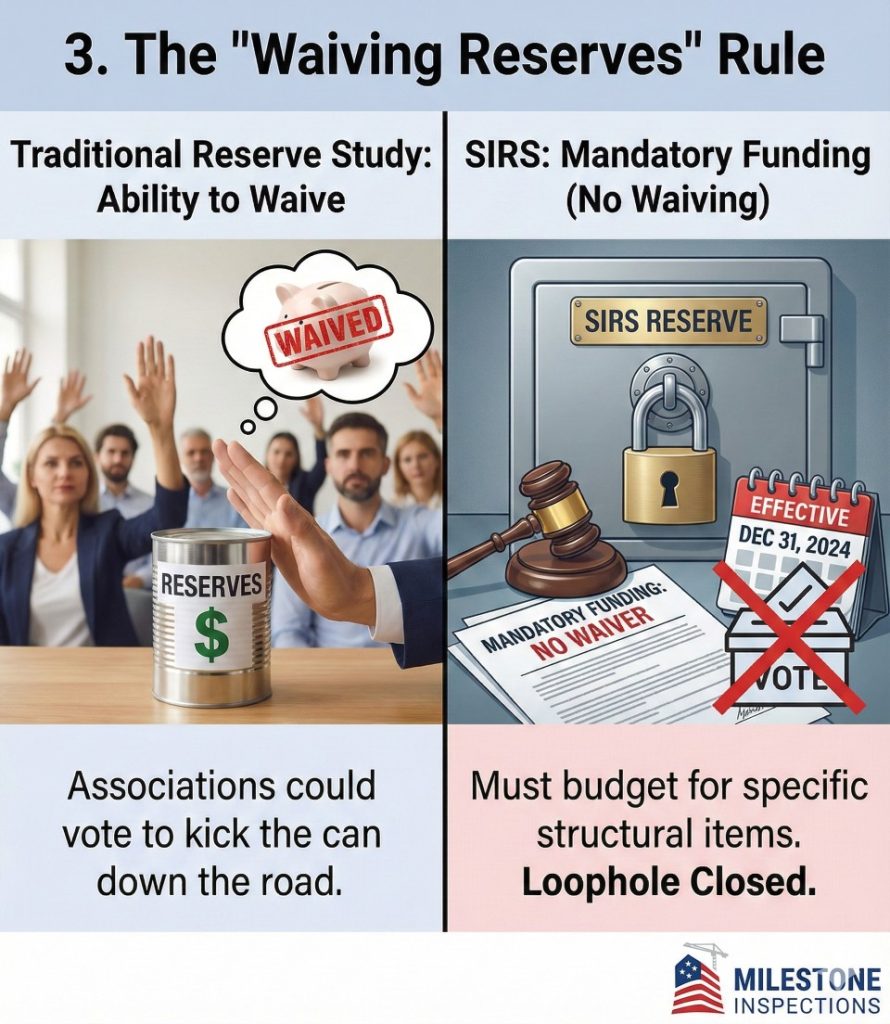
Traditional Reserve Study: In the past, associations could vote to waive or partially fund their reserves. If the board didn’t want to raise fees, they could simply vote to kick the can down the road.
SIRS: This loophole has been closed. Effective December 31, 2024, associations cannot vote to waive or underfund the reserves for the specific structural items identified in the SIRS. If the SIRS says you need $100,000 for a roof in 5 years, you must budget for it. This mandatory funding is designed to prevent another Surfside tragedy caused by deferred maintenance.
4. The Impact on Your Budget
Because of the mandatory funding requirement, the transition from a traditional setup to a SIRS often results in an increase in monthly maintenance fees.
When comparing SIRS vs reserve study budgets, the SIRS budget is often higher because it uses “replacement cost” data verified by an engineer. However, this higher monthly fee protects owners from the massive, sudden “special assessments” that occur when a building has zero reserves and a failing roof. It shifts the financial model from “crisis management” to “proactive planning.”
5. Do You Need Both Studies?
This is a common question. Since the SIRS only covers structural/safety items, what about the pool furniture, the gym equipment, and the lobby carpet?
Most associations will end up with a hybrid approach. You need the SIRS to comply with the state law for structural items. However, you may still maintain a traditional reserve schedule (which can still be waived/reduced by vote) for the non-structural, aesthetic items.
Our firm specializes in creating the SIRS portion, providing the rigorous engineering data required by the state. You can learn more about our specific process on our SIRS Service Page.
Navigating the Transition
The deadline for completing the first SIRS is December 31, 2024, for most existing associations. If your board is still relying on a traditional reserve study from a non-engineer, you are likely out of compliance.
For a deeper legal perspective on these changes, we recommend reviewing resources from the The Florida Bar regarding condominium law changes.
Get Compliant with a Licensed Engineer
Don’t let the confusion of SIRS vs reserve study put your association at risk. We provide the licensed engineering expertise required to produce a fully compliant Structural Integrity Reserve Study.
Contact us today for a proposal and let us help you secure your community’s financial and structural future.
Request a Proposal
The fastest way to get answers is to call us directly. Our team is available to discuss your building’s specific needs.