Florida Milestone Inspection Law: Top 5 Critical Liability Risks for Condo Boards
As a condominium board member, understanding the exact requirements of the florida milestone inspection law is no longer just a matter of basic property maintenance—it is a critical legal obligation. In the wake of recent legislative changes, the state has fundamentally shifted how building safety is enforced, placing the burden of compliance squarely on the shoulders of association boards.
Many property managers and volunteer board members are unaware of the severe penalties attached to missing their deadlines. This guide will outline the five most critical legal and financial risks your association faces if you fail to comply with the florida milestone inspection law, and more importantly, how you can protect yourself and your community today.
Table of Contents
Understanding the Weight of the Florida Milestone Inspection Law
Following the Surfside tragedy, lawmakers enacted Senate Bill 4-D (and subsequent updates like SB-154), which created strict, non-negotiable deadlines for aging structures. If your building is three stories or taller, it must undergo a mandatory structural and electrical inspection at 30 years of age (or 25 years if located near the coast), and every 10 years thereafter.
But what happens if you delay? The enforcement of the florida milestone inspection law is designed with sharp “teeth” to ensure compliance.
The 5 Critical Risks of Non-Compliance
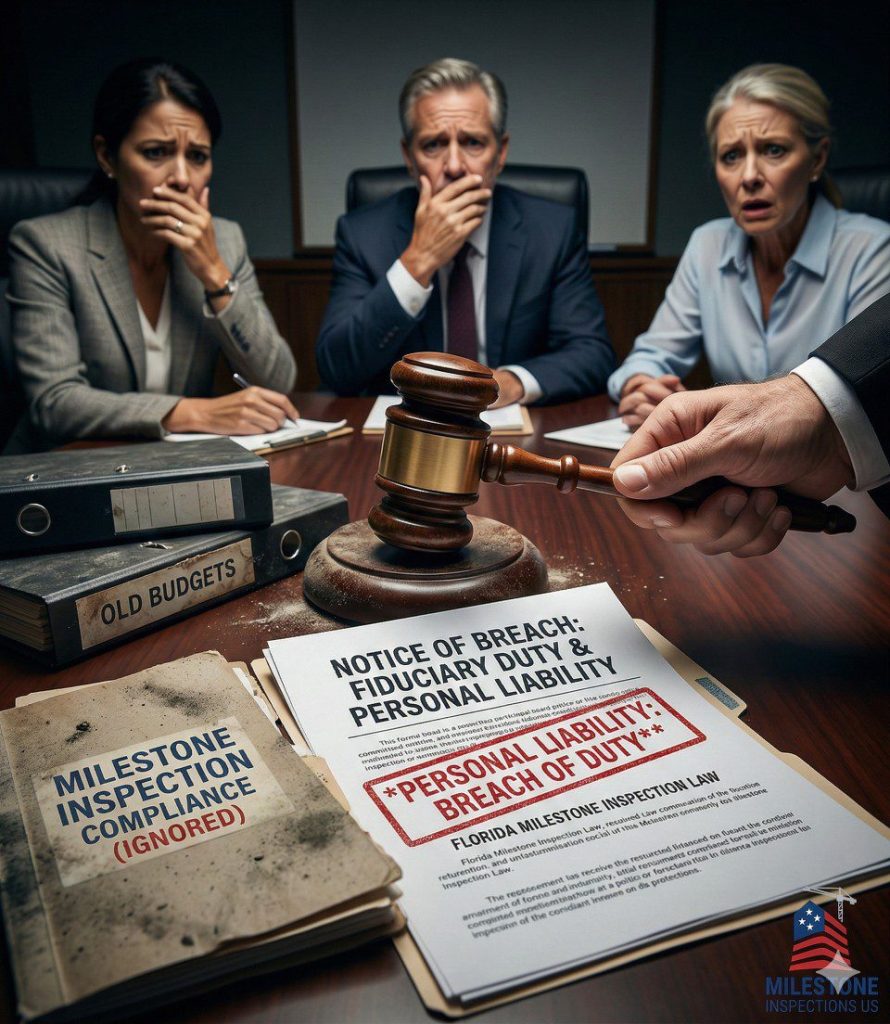
1. Breach of Fiduciary Duty and Personal Liability
Board members have a legal fiduciary duty to act in the best interest of the association and maintain the common elements. According to the statutes surrounding the florida milestone inspection law, willfully failing to complete the required inspections is a direct breach of this duty. In severe cases of negligence resulting in property damage or injury, board members could potentially face personal liability lawsuits from unit owners, stripping away the standard protections usually afforded to volunteers.

2. Massive Daily Fines and County Liens
Local building departments are the enforcement arm of the state. If your deadline passes without a submitted report from a licensed engineer, the county code enforcement division will step in. They typically issue notices of violation followed by steep, compounding daily fines. If these fines go unpaid, the county can place a lien on the entire condominium property, which creates a financial nightmare for every single owner.
3. Complete Loss of Insurance Coverage
Insurance carriers operate on risk assessment. Today, property insurers strictly monitor compliance with the florida milestone inspection law. If a building is overdue for its inspection, carriers will likely refuse to renew the master policy, or they will cancel it entirely. Operating a multi-family building without insurance is illegal and leaves the association entirely exposed to catastrophic financial ruin from storms, fires, or accidents.

4. Halting Real Estate Transactions
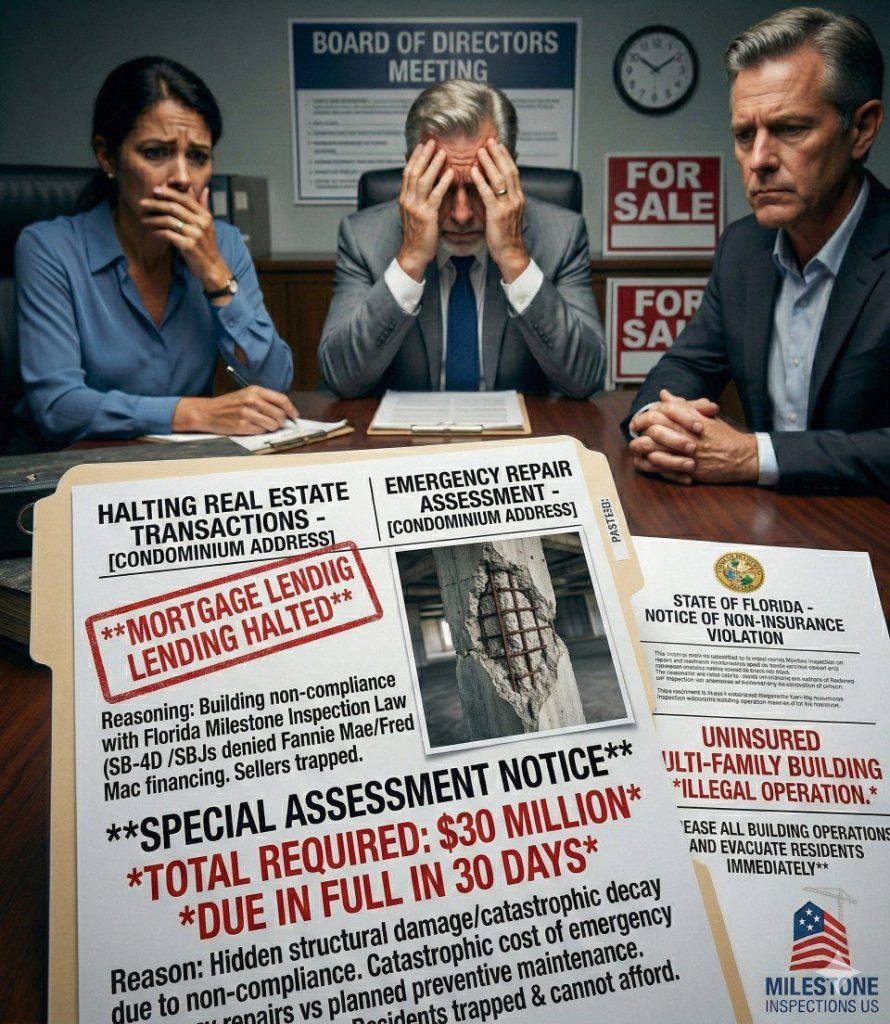
Mortgage lenders (like Fannie Mae and Freddie Mac) have updated their lending criteria nationwide. Before approving a mortgage for a condo buyer, lenders now demand proof that the building complies with local safety laws. If your building has ignored the florida milestone inspection law, buyers will be denied financing. This paralyzes real estate sales within your building, trapping current owners who wish to sell.
5. The Sudden Cost of Emergency Repairs
The law exists to catch structural issues—like concrete spalling or rebar corrosion—while they are still manageable. Delaying the inspection doesn’t stop the building from decaying; it simply hides the problem. When hidden damage eventually causes a failure, the emergency repair costs are exponentially higher than planned, preventative maintenance. This inevitably leads to massive, sudden special assessments that residents cannot afford.
How to Protect Your Board and Your Building
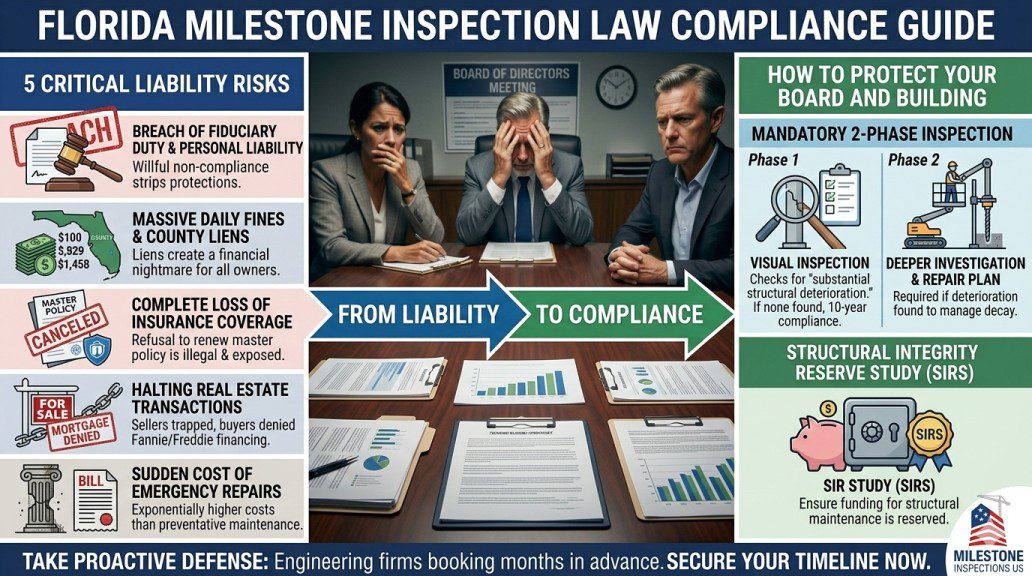
The stress of these liabilities is high, but the solution is straightforward. The law requires you to hire a licensed Professional Engineer or Architect to perform a two-phase inspection.- Phase 1: A visual inspection to determine if there is “substantial structural deterioration.” If none is found, your compliance is complete for 10 years.
- Phase 2: If deterioration is found, a deeper investigation is required to determine a repair plan.
You must also complete a Structural Integrity Reserve Study (SIRS) alongside this process to ensure you have the funds to maintain the building. For exact legal wording, boards should always review the official Florida Statutes regarding Building Safety.
Take Action Before Your Deadline Passes
Do not wait for a violation notice in the mail. A proactive approach is your ultimate defense against the strict penalties of the florida milestone inspection law. Engineering firms are booking months in advance, so securing your inspection timeline now is critical to fulfilling your fiduciary duty.
At Milestone Inspections US, we specialize in guiding condo associations safely through this exact legislation. We provide the licensed engineering expertise and clear reporting required to keep you out of legal trouble and ensure your building is safe.
Contact us today to get a free, detailed proposal for your mandatory inspection and take the liability off your board’s shoulders.
Related Articles
Related Services
- Full service overview: milestone inspections Florida
Need a Licensed Structural Engineer?
Paul Edwards Pineda, PE — Registered Structural Engineer
FL PE #61808 | FL Threshold Inspector #7026221 | TX PE #116762 | TN PE #124078 | FHA #A0939
Get a Free Proposal