Your structural reserve study report is the single most important financial planning document your Florida condominium association will receive this decade. It determines how much money you must hold in reserves, how much each unit owner contributes annually, and whether your building can avoid devastating special assessments.

Yet many board members receive a 60-page structural reserve study report and have no idea how to read it, challenge its assumptions, or use it for long-term planning. After the Champlain Towers South collapse in Surfside — which killed 98 people in June 2021 — Florida passed Senate Bill 4-D making these studies mandatory. The stakes could not be higher.

At Milestone Inspections US, Paul Edwards Pineda, PE — a Registered Structural Engineer with over 20 years of experience (FL PE #61808, Threshold Inspector #7026221) — prepares SIRS reports that boards can actually understand and act on. This guide breaks down every section of a professional structural reserve study report so you know exactly what to expect and what to question.

Table of Contents

What Is a Structural Reserve Study Report?

A structural reserve study report — formally called a Structural Integrity Reserve Study (SIRS) — is an engineering assessment required under Florida Statute 718.112 for condominium buildings three stories or taller. The report evaluates eight structural and life-safety components, estimates their remaining useful life, projects replacement costs, and calculates the annual reserve funding needed to cover those future expenses.

Starting January 1, 2026, associations can no longer waive or reduce reserves for the components identified in a SIRS. That means the numbers in your structural reserve study report directly set your association’s minimum financial obligations — potentially for decades. Florida has over 912,000 condo units in buildings that need these studies completed.

structural reserve study report presentation to florida condo board

Section 1: Executive Summary

The executive summary is the most-read section of any structural reserve study report. It provides a high-level overview of your building’s structural condition, the total projected reserve requirement, and the recommended annual contribution per unit.

A well-written executive summary should be understandable by any board member, regardless of engineering background. It should state the building’s address, age, number of stories, number of units, and the date of the on-site inspection. It should clearly state whether the building passed or requires follow-up action.

When we prepare SIRS reports at Milestone Inspections US, the executive summary includes a one-page condition dashboard showing each of the eight components with color-coded ratings — green, yellow, or red — so the board immediately knows where the building stands. If you receive a structural reserve study report with an executive summary full of technical jargon and no clear bottom line, that is a red flag about report quality.

Section 2: Component Inventory and Condition Assessment

This is the technical heart of your structural reserve study report. The engineer must evaluate eight specific components required by Florida law: roof, load-bearing walls and primary structural members, floor systems, foundation, fireproofing and fire protection, plumbing, waterproofing and exterior painting, and windows and exterior doors.

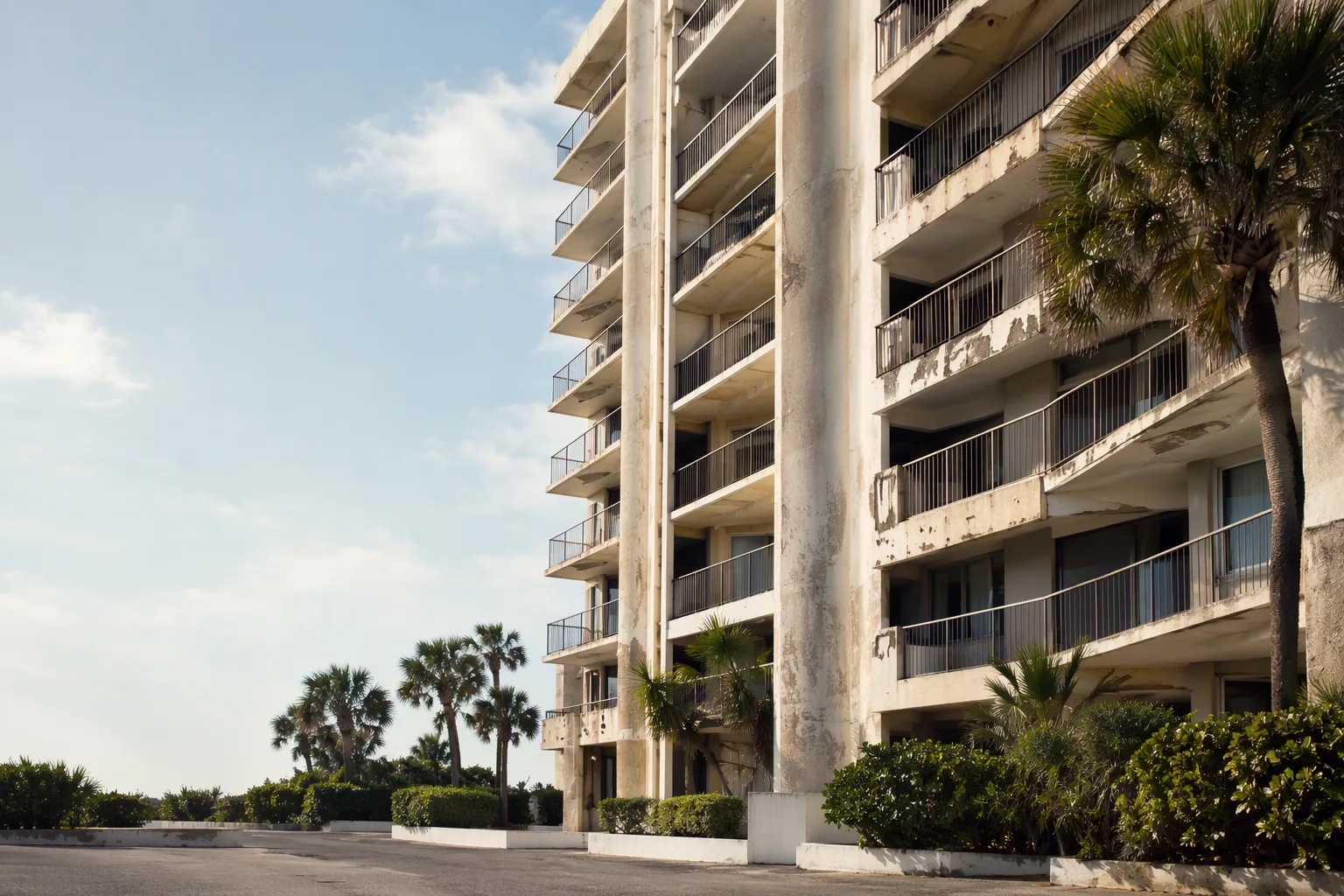
For each component, the report should document current condition with photographic evidence, identify any deterioration or deficiencies, and describe the inspection methodology used. In South Florida, chloride-induced corrosion of reinforcing steel is the most common structural deficiency we encounter — and it is often invisible from the surface until concrete begins to spall.

Paul Pineda’s condition assessments go beyond visual observation where warranted. Depending on building conditions, we may recommend concrete core sampling, ground-penetrating radar scanning, or chloride content testing to determine the actual extent of reinforcement corrosion. These findings directly affect the accuracy of your reserve projections. A structural reserve study report based only on surface-level observation may significantly underestimate future repair costs. The American Society of Civil Engineers publishes condition assessment standards we follow for every inspection.

structural reserve study report document with engineering calculations

Section 3: Remaining Useful Life Estimates

For each component in the structural reserve study report, the engineer provides a remaining useful life (RUL) estimate — the projected number of years before major repair or replacement is needed. These estimates drive the entire financial model.

RUL estimates should be based on the component’s current condition, its original installation date, the manufacturer’s expected service life, local environmental factors (salt exposure, hurricane risk, UV degradation), and the association’s maintenance history. A flat roof in coastal Broward County has a very different expected life than the same roof system in central Orlando.

Be cautious of any structural reserve study report that assigns identical remaining life estimates to all components. Every building ages differently based on construction quality, maintenance practices, and environmental exposure. At Milestone Inspections US, we calibrate each RUL estimate to your building’s specific conditions. A 1985 oceanfront tower in Fort Lauderdale with deferred maintenance will have very different numbers than a 2005 inland building in West Palm Beach with proactive upkeep.

Typical RUL ranges we see in South Florida: roofs (5-20 years remaining), waterproofing/painting (3-10 years), plumbing risers (10-25 years), windows (15-30 years), structural concrete (20-50+ years with proper maintenance).

Section 4: Financial Projections and Reserve Schedule

The financial section of your structural reserve study report translates engineering findings into dollars. This is where many board members pay the closest attention — and where the quality of the engineering directly affects your wallet.

The report should include: current replacement cost for each component at today’s construction prices, inflation-adjusted future replacement costs (we typically use 3-5% annual construction cost inflation for Florida), a 30-year cash flow projection showing when major expenses will occur, the calculated annual reserve contribution needed to fully fund all projected replacements, and the per-unit annual assessment amount.

Starting January 1, 2026, Florida associations cannot waive or reduce reserves for SIRS components. If your structural reserve study report projects a $2 million roof replacement in 12 years, your association must be funding reserves toward that number — no exceptions.

Common cost ranges we include in South Florida SIRS reports: roof replacement ($8-15 per square foot), concrete restoration ($15-40 per square foot of affected area), plumbing riser replacement ($8,000-15,000 per unit), window replacement ($500-1,500 per window), waterproofing/painting ($3-8 per square foot of facade). These numbers vary significantly by building size, height, and access difficulty.

Section 5: Recommendations and Priority Actions

The final technical section of your structural reserve study report provides prioritized recommendations. Not all identified issues carry equal urgency. A competent SIRS engineer categorizes findings into immediate safety concerns (address within 6 months), short-term repairs (1-3 years), medium-term planning items (3-10 years), and long-term capital replacements (10-30 years).

This prioritization helps boards allocate resources efficiently. Spending $50,000 on waterproofing repairs today may prevent $500,000 in concrete restoration five years from now. A strong structural reserve study report explains these cost-benefit relationships clearly.

Paul Pineda includes specific repair scope descriptions in every recommendation — not just “repair concrete” but “restore approximately 200 linear feet of spalled balcony edges at floors 4 through 12, including reinforcement treatment, forming, and waterproof coating.” That level of detail gives your board and your contractors a clear starting point for obtaining repair bids.

How to Use Your Structural Reserve Study Report

Your structural reserve study report is a working document, not a shelf decoration. Here is how to put it to use immediately:

  • Budget planning: Use the recommended annual contribution to set next year’s assessments. Present the 30-year cash flow chart at your annual meeting to show unit owners exactly why the reserve contribution is what it is.
  • Maintenance prioritization: Follow the priority action list to schedule repairs. Addressing items early almost always costs less than waiting for failure.
  • Insurance negotiations: Share relevant sections with your insurance carrier. Buildings with completed SIRS reports and funded reserves may qualify for better rates.
  • Resale transparency: Prospective buyers and their lenders increasingly ask for SIRS documentation. A thorough, professional report adds credibility to your association’s financial health.
  • Legal compliance: Keep the report accessible for county building department review. Under Florida law, the association must maintain the report and provide it to any unit owner upon request.

We recommend reviewing your structural reserve study report with your board, property manager, and legal counsel together. The engineer should be available to answer questions — at Milestone Inspections US, Paul Pineda offers a board presentation session after every SIRS delivery to walk through the findings and recommendations in plain language.

Structural Reserve Study Report: Frequently Asked Questions

How often should a structural reserve study report be updated?

Florida requires updates at least every 10 years. However, updating every 5 years is recommended, especially after major repairs or significant construction cost changes. Your structural reserve study report should reflect current building conditions and costs.

What is the difference between a SIRS report and a traditional reserve study?

A traditional reserve study covers all common elements (pools, pavement, landscaping, etc.). A structural reserve study report (SIRS) focuses specifically on structural and life-safety components and must be prepared by a licensed PE or architect. SIRS reserves cannot be waived.

How much does a structural reserve study report cost?

Costs typically range from $3,000 to $15,000+ depending on building size, number of units, and component complexity. The investment is small compared to the financial planning value the report provides. Request a free proposal.

Can our board choose not to follow the report recommendations?

Boards cannot waive or reduce funding for SIRS structural components under current Florida law. However, the board retains discretion on project timing, contractor selection, and repair methods as long as the reserve funding schedule is maintained.

Does the structural reserve study report connect to our milestone inspection?

Yes. Your milestone inspection findings directly inform the structural reserve study report. Having the same engineer perform both ensures consistent findings and accurate cost projections.

Get Your Structural Reserve Study Report from a Registered Structural Engineer

Your building’s financial future depends on an accurate, comprehensive structural reserve study report prepared by an engineer who understands Florida’s unique structural challenges. Paul Edwards Pineda, PE (FL PE #61808, Threshold Inspector #7026221, FHA Consultant #A0939) graduated from the National University of Engineering in Lima, Peru, and has spent over two decades inspecting buildings across Florida.

Paul founded both Milestone Inspections US and Studio A Engineering to serve Florida’s condominium community with the structural expertise this moment demands. Verify his credentials at MyFloridaLicense.com.

Call 1-888-819-3647 (1-888-819-ENGR) or request a free proposal.

Request Your Structural Reserve Study Report

Get a detailed proposal for your building’s SIRS report. Our team responds within 24 hours.

Tambien hablamos espanol.

Related Guides You May Need

Need a Licensed Structural Engineer?

Paul Edwards Pineda, PE — Registered Structural Engineer

FL PE #61808 | FL Threshold Inspector #7026221 | TX PE #116762 | TN PE #124078 | FHA #A0939

Get a Free Proposal
Scroll to Top

Get A Free Proposal.

Paul Edwards Pineda, PE — Registered Structural Engineer

FL PE #61808 | Threshold Inspector #7026221 | TX PE #116762 | TN PE #124078 | FHA #A0939

1-888-819-3647 (1-888-819-ENGR) | office@milestoneinspections.us